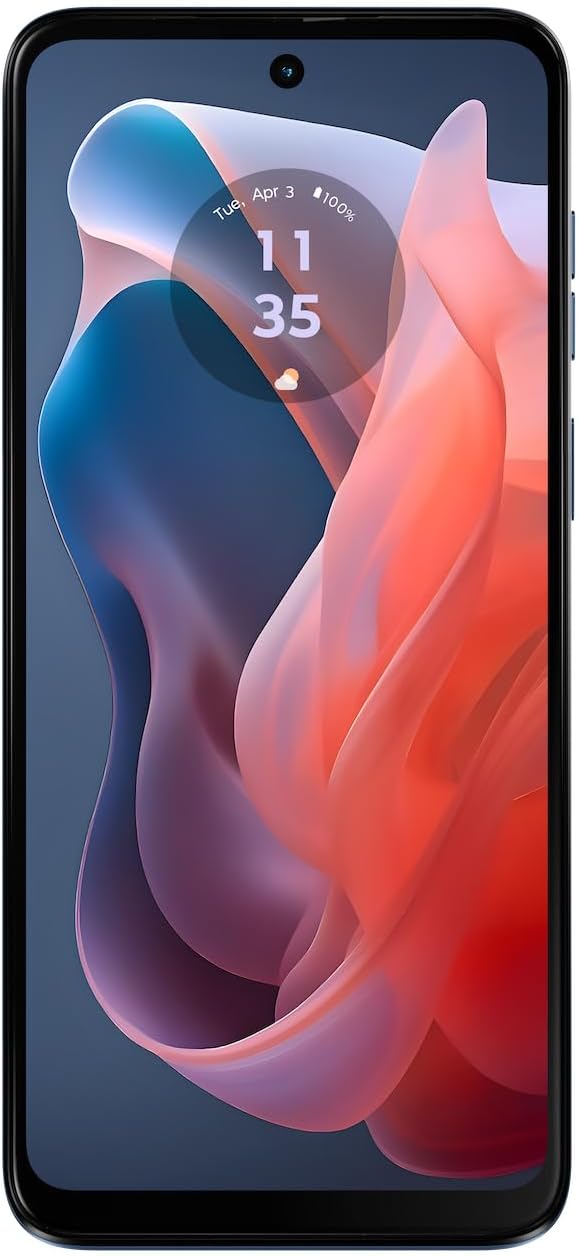
Imagine you’re setting up a second line — maybe for a part-time employee, a teenager, or a travel SIM — and you’ve capped the hardware budget at $200. You pull up a carrier website and immediately face a wall of unfamiliar names: Moto G Power, Galaxy A15, TCL 50 XE, Nokia G310. They all look roughly similar on paper. They all promise “5G” (the latest generation of cellular network speeds, faster than the older 4G LTE standard in areas where it’s deployed). And they’re all priced within $40 of each other. So which ones are actually worth buying — and which ones will be back in a drawer in eight months because the camera is unusable or the software stopped updating? That’s exactly what this guide is built to answer. We’ve done the research so you don’t have to learn it the hard way.
| EDITOR'S PICK[Motorola Moto G Stylus 5G](https://www.amazon.com/dp/B0DWV55DXH?tag=greenflower20-20) | Mid-tier[Moto G 5G](https://www.amazon.com/dp/B0FNS5XW5W?tag=greenflower20-20) | Budget pick[Motorola Moto G Play LTE](https://www.amazon.com/dp/B0CP6DDN1H?tag=greenflower20-20) | |
|---|---|---|---|
| Network | 5G | 5G | LTE |
| RAM / Storage | 8/256GB | 4/128GB | 4/64GB |
| Stylus included | ✓ | ✗ | ✗ |
| Price | $199.99 | $128.72 | $109.95 |
| See on Amazon → | See on Amazon → | See on Amazon → |
Why “Budget” Doesn’t Always Mean “Bad” — But Sometimes It Does
The sub-$200 Android market has genuinely improved since 2022. The floor rose: chipmakers like MediaTek now sell processors powerful enough for smooth everyday use to budget phone manufacturers at a price point that wasn’t possible three years ago. But the market also got noisier. More SKUs (stock-keeping units — individual product variants), more carrier-exclusive models, and more phones that look competitive on a spec sheet but quietly cut corners in ways that only surface after 90 days of real use.
The trap most buyers fall into is treating specs as a proxy for experience. A phone can advertise a 50-megapixel camera and still produce muddy, over-processed photos because the image sensor itself is tiny and the software processing is weak. A phone can advertise 5G and only support sub-6GHz bands (the wide-coverage, moderate-speed flavor of 5G), which is actually fine for most users — but you should know that’s what you’re getting, not mmWave (millimeter wave — the ultra-fast, short-range version of 5G found mainly in dense urban cores like stadiums and airports).
The decision frame for this tier isn’t “what’s the best phone?” It’s:
Does this phone do its actual job well enough that I won’t replace it within 18 months?
That’s the true cost question. A $150 phone you replace in 14 months costs more over two years than a $200 phone that runs clean for 30.
The Four Phones Worth Knowing in 2026
Rather than cataloguing every option, the practical approach is to build intuition around the models that reviewers and owners consistently reference as the benchmarks of this category.
Motorola Moto G Power 5G (2025 edition)
The Moto G Power line is the closest thing this segment has to a consensus pick. Tom’s Guide’s Best Budget Android Phones 2025 roundup placed it in the top tier for battery life and software cleanliness — Motorola ships near-stock Android with minimal bloatware (pre-installed apps you didn’t ask for), which means the phone actually runs as fast as its hardware suggests.
Key spec snapshot (per GSMArena):
- Chipset: MediaTek Dimensity 6100+
- Battery: 5,000 mAh (milliamp-hours — larger number = longer battery life)
- RAM: 4–8 GB depending on variant
- Guaranteed Android OS updates: 3 years
- Estimated street price: $179–$199 unlocked
The battery is the genuine differentiator here. Owners consistently report two-day battery life under moderate use, which matters enormously for the use case of a secondary business line or a phone for someone who won’t reliably charge nightly. The camera is competent, not impressive — fine for documentation, social sharing, and video calls, but don’t expect it to compete with a Pixel 8 on low-light shots.
The tradeoff: The processor is mid-range, not slow. But if your intended user plays mobile games or edits video on-device, this chip will show its limits within a year as apps grow heavier.
Samsung Galaxy A15 5G
Samsung’s Galaxy A series (the “A” stands for “Awesome” in Samsung’s marketing, though the more relevant point is that it’s the mid/budget tier below the flagship “S” series) has the most retail distribution of any budget Android line in the U.S. You’ll find the A15 5G at every major carrier, which matters for financing options and trade-in eligibility.
PCMag’s Best Cheap Phones 2026 guide notes the A15 5G as the strongest choice for buyers who prioritize Samsung’s software ecosystem — particularly if they already own a Samsung tablet or use Samsung’s DeX (desktop mode) features, though DeX itself isn’t supported at this price point.
Key spec snapshot (per GSMArena):
- Chipset: MediaTek Dimensity 6100+
- Battery: 5,000 mAh
- RAM: 4 GB (base model in most U.S. configurations)
- Guaranteed Android OS updates: 4 years
- Estimated street price: $149–$189 unlocked or carrier-direct
The four-year update commitment is meaningful. Android Authority’s Budget Phone Longevity Report 2025 found that software update commitments are the single strongest predictor of real-world device lifespan at this price tier — more predictive than processor benchmarks, because an unsupported phone becomes a security liability that forces replacement even if the hardware still works.
The tradeoff: Samsung’s One UI (its custom Android skin — think of it as a layer of Samsung-specific features and visual design placed over Google’s base Android) ships with more pre-installed apps than Motorola’s near-stock approach. On 4 GB of RAM, that overhead is noticeable. If you’re sensitive to software snappiness, the base A15 5G can feel slightly sluggish by month 18.
TCL 50 XE 5G
TCL is the wildcard in this segment. The Shenzhen-based manufacturer (also the parent company of several TV brands) has been aggressively pricing hardware to gain U.S. market share. The 50 XE 5G sits at approximately $129–$149 at T-Mobile and Metro by T-Mobile, making it the cheapest credible 5G option in the segment.
CNET’s Best Budget Smartphones Under $200 review notes the display quality as a standout — TCL’s TV manufacturing heritage shows up in above-average screen calibration for the price point, which matters for video consumption and color accuracy in product photos.
The tradeoff to name explicitly: TCL’s software update commitments are shorter than Motorola or Samsung’s, and the company’s track record on post-launch patches is inconsistent, per The Verge’s 2025 budget Android buying guide. If you’re buying this for an employee or a household member who won’t be technically managed, the shorter support window is a real risk. If you’re buying it as an 18-month disposable line and plan to replace it at the next upgrade cycle anyway, the math changes in TCL’s favor.
Nokia G310 5G
Nokia (currently operated by HMD Global, the Finnish company that licenses the Nokia brand for smartphones) has historically positioned itself as the “clean Android, long updates” choice. The G310 ships with Android One (Google’s program for guaranteed OS updates and near-stock software on non-Pixel devices) and is priced around $149–$169.
The honest assessment from aggregated reviews: the G310’s camera and processor are behind Motorola and Samsung at comparable price points. But for users whose primary requirement is a simple, secure, long-supported device — think a parent’s first smartphone or a basic line for field staff who need reliability over performance — Android Authority’s 2025 coverage consistently positions Nokia’s budget tier as underrated precisely because buyers in this category undervalue software longevity.
The Math That Actually Matters
Here’s the total-cost framing that separates a good deal from false economy:
| Phone | Street Price | Update Commitment | Realistic Lifespan | Monthly Cost |
|---|---|---|---|---|
| Moto G Power 5G (2025) | $189 | 3 years | 30–36 months | ~$5.50/mo |
| Galaxy A15 5G | $169 | 4 years | 36–42 months | ~$4.50/mo |
| TCL 50 XE 5G | $139 | ~2 years | 18–24 months | ~$6.50/mo |
| Nokia G310 5G | $159 | 3 years | 30–36 months | ~$4.80/mo |
Monthly cost = street price ÷ realistic lifespan in months. Carrier financing rates vary; assumes outright purchase.
The TCL is the cheapest phone and the most expensive on a per-month basis if it needs replacing at the 18-month mark. The Galaxy A15 5G, despite not being the lowest price, is the strongest value by monthly cost if you extract the full update window.
The Carrier and Plan Interaction Nobody Talks About
One variable that dramatically changes the real-world experience of a budget Android: which carrier’s bands the phone supports. Not all unlocked phones support all carriers’ frequencies equally.
5G in the U.S. runs on multiple spectrum bands. T-Mobile’s mid-band 5G (the n41 band) delivers significantly faster speeds than the low-band 5G (n25, n71) that Verizon and AT&T lean on for broad coverage. Many budget phones sold through T-Mobile and Metro by T-Mobile support n41; versions sold through Verizon or AT&T may not. This isn’t disclosed prominently at retail.
Per GSMArena’s band specifications for these models: the Moto G Power 2025 and Galaxy A15 5G both support n41 in their T-Mobile variants but may ship without it in unlocked Amazon or Best Buy configurations. Always verify band support against your intended carrier before purchasing unlocked.
If you’re buying for an MVNO (Mobile Virtual Network Operator — a carrier like Mint Mobile, Visible, or Cricket that leases network access from a major carrier instead of owning towers), the underlying network matters more than the MVNO brand. Mint Mobile runs on T-Mobile’s network; Cricket runs on AT&T’s. Matching the phone’s band support to the MVNO’s parent network is the single most important technical check in this purchase.
If X, Then Y: The Decision Rules
You’ve read the tradeoffs. Here’s how to close the decision:
If the phone needs to last 3+ years and updates matter (business line, elder household member, security-conscious user): Galaxy A15 5G. The four-year update commitment is the only one in this segment that justifies a long ownership cycle.
If battery life is the primary requirement and the user won’t tolerate charging anxiety: Moto G Power 5G (2025). No other phone at this price point consistently earns the two-day battery reputation across owner reviews.
If you’re buying a planned 18-month disposable line on T-Mobile or Metro, cost is paramount, and you’ll evaluate replacement at the next cycle: TCL 50 XE 5G. Accept the shorter support window; the savings are real.
If the user wants maximum simplicity, clean software, and doesn’t care about camera quality: Nokia G310. The Android One experience is genuinely clutter-free in a way that benefits non-technical users.
If none of these fit and $250 is actually available: Stretch to the Motorola Moto G Stylus 5G or add $60 more for the Google Pixel 8a on sale — both represent a meaningful capability jump that the sub-$200 tier cannot match for camera, AI features, or processing headroom.
The sub-$200 Android market rewards buyers who ask the right questions: not “which phone has the best spec sheet?” but “which phone does its actual job reliably, long enough to justify the purchase?” Those are not always the same phone — and knowing the difference is what separates a smart buy from a false economy.