Imagine you’re standing in a carrier store — or, more likely, scrolling a product page at 11 p.m. — trying to decide between three phones that all say “Pixel 10” on the box but carry prices ranging from $699 to $1,199. Google’s Pixel line (Android smartphones made directly by Google, known for clean software and computational photography) has always played a quiet game: skip the flashy marketing, let the camera and software do the talking, and price aggressively enough to sting Samsung and Apple where it hurts. The Pixel 10 generation keeps that tradition alive, but the internal tradeoffs between the standard Pixel 10, the Pixel 10 Pro, and the Pixel 10 Pro XL are sharper than they’ve ever been. This guide breaks down exactly what you’re buying at each price point, where the value math works, and where Google is quietly asking you to pay for things you may not need.
What’s Actually New in the Pixel 10 Generation
Before comparing models, it helps to understand what separates Pixel 10 from its predecessor. The headline change is Google’s Tensor G5 chip — the company’s fifth-generation in-house processor, built on TSMC’s (Taiwan Semiconductor Manufacturing Company, the world’s leading chip foundry) 3-nanometer node. For context: smaller nanometer numbers generally mean more processing power packed into the same physical space with less battery drain.
Per Wired’s Tensor G5 deep dive published in March 2026, the new chip delivers roughly 20% faster on-device AI (artificial intelligence) inference compared to the G4 — and that matters specifically for Pixel features like Call Screen, Live Translate, and the expanded Gemini integration that runs locally without needing a cellular or Wi-Fi connection. That last part is notable for anyone who travels internationally or works in areas with spotty coverage.
What hasn’t changed dramatically: the camera hardware on the standard Pixel 10 is an iterative improvement over the Pixel 9, while the Pro models get a meaningful sensor upgrade on the telephoto (the long-range zoom camera). The Verge’s April 2026 review of the Pixel 10 Pro notes that the 5x optical zoom — meaning true optical magnification rather than digital cropping — finally closes the gap with Samsung’s Galaxy S25 Ultra at comparable zoom distances.
By the numbers — Pixel 10 lineup at a glance (May 2026 MSRP):
| Model | Price (Unlocked) | Display | Battery | Telephoto |
|---|---|---|---|---|
| Pixel 10 | $699 | 6.3” OLED, 120Hz | 4,700 mAh | None |
| Pixel 10 Pro | $999 | 6.3” OLED, 1-120Hz LTPO | 4,700 mAh | 5x optical |
| Pixel 10 Pro XL | $1,099–$1,199 | 6.9” OLED, 1-120Hz LTPO | 5,100 mAh | 5x optical |
OLED: Organic Light-Emitting Diode, a display technology that produces deep blacks and vivid colors. LTPO: Low-Temperature Polycrystalline Oxide, a screen technology that dynamically adjusts refresh rate from 1Hz to 120Hz to conserve battery.
The Pixel 10: Who It’s Actually For
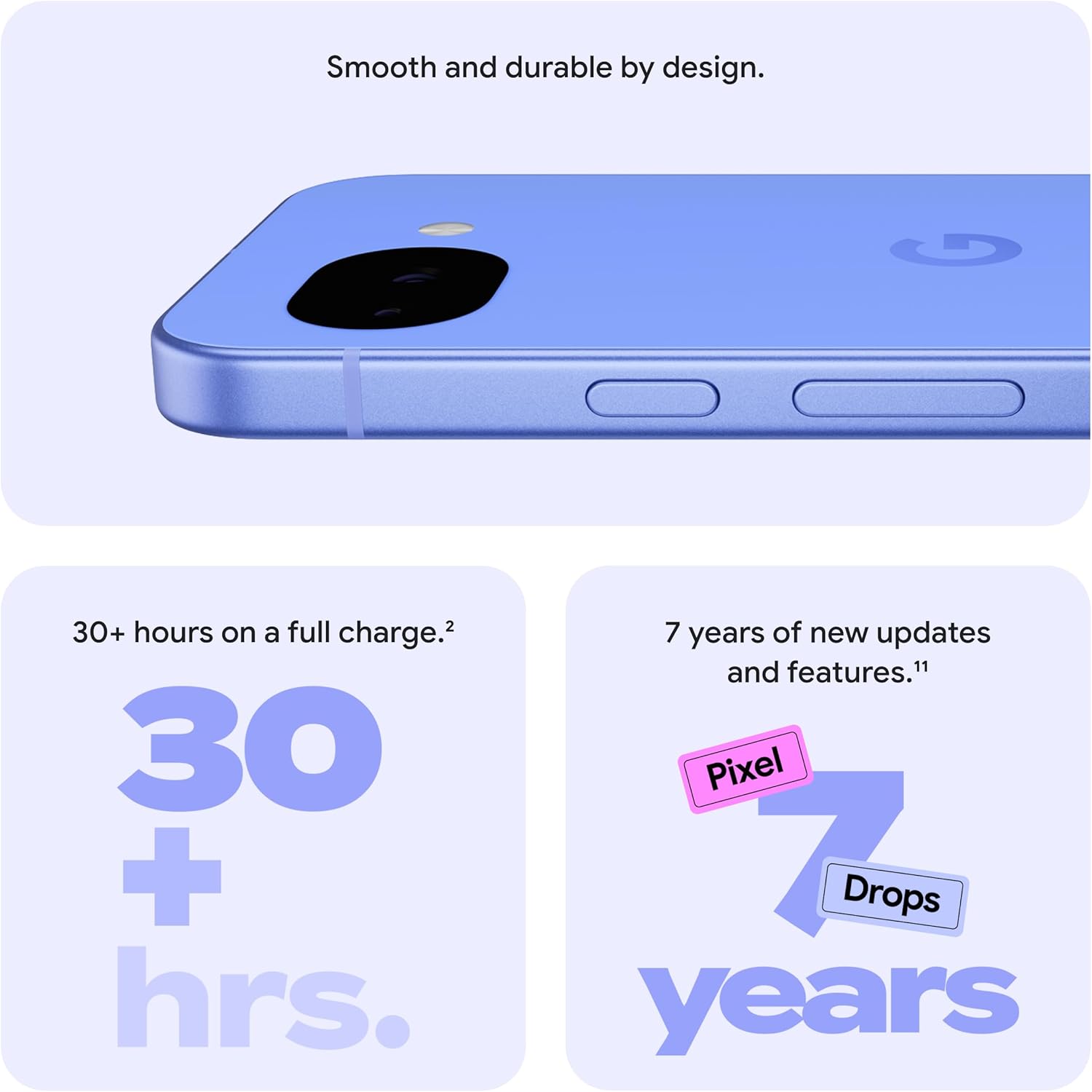
At $699 unlocked, the standard Pixel 10 is the one Google wants you to underestimate. It runs the same Tensor G5 chip as its Pro siblings. It gets the same seven years of OS (operating system) and security updates — a policy Google’s support page confirms, making it the longest software commitment in the Android ecosystem as of mid-2026. The 50-megapixel main camera shares the same sensor generation as the Pixel 9, with software-side improvements via computational photography (Google’s term for using AI to process and enhance images beyond what the hardware alone would capture).
Where the standard model cuts corners: there’s no telephoto lens, which means anything beyond roughly 2x zoom is digital — software interpolation that loses detail. The display, while excellent for the price, uses a standard 60–120Hz panel rather than the Pro’s LTPO variable rate, so it doesn’t drop as low as 1Hz when displaying a static screen. In practical terms, reviewers at Tom’s Guide’s 2026 best Android phones roundup estimate this costs roughly 10–15% daily battery life versus the Pro XL under comparable use.
Decision rule: If your photography use is primarily social media, video calls, and casual documentation — not deliberate zoom shots or professional-context imagery — the Pixel 10 at $699 is genuinely difficult to beat. Add a carrier promotion (all three major carriers were running $200–$300 trade-in credits toward Pixel 10 devices as of May 2026, per carrier promotional materials), and the effective price lands under $500 for anyone coming off a Pixel 7 or Galaxy A series device.
The honest caveat: if you’re the person in your family or office who gets asked to “get a better shot” of something, you’ll feel the absence of a telephoto within the first week.
The Pixel 10 Pro: The One Most People Should Actually Buy
The $999 Pixel 10 Pro is where the value calculus tips decisively in Google’s favor. You get the LTPO display, the 5x optical telephoto, and a pro-mode camera interface that Android Authority’s May 2026 comparison review describes as “the most significant telephoto leap in Pixel history” — primarily because the sensor behind the 5x lens is larger than in prior generations, pulling in more light at range.
The Pro also adds a temperature sensor (useful for measuring surface temperatures, flagged by reviewers mainly as a novelty for consumers but legitimately useful for field technicians and HVAC professionals), and Pro-specific video features including 4K at 60fps (frames per second — smoother video) on the front-facing camera, a feature the standard Pixel 10 cannot match.
Here’s the tradeoff that matters at this tier: the Pixel 10 Pro and Pro XL share nearly identical internals. The $100–$200 premium to step up to the XL buys you a larger screen (6.9 inches versus 6.3) and a bigger battery (5,100 mAh versus 4,700 mAh). If you’re a one-handed phone user, commute on transit and read on your phone, or simply prefer compact devices, the Pro at $999 is not a compromise — it’s the right device.
PCMag’s April 2026 Pixel 10 Pro XL review noted that in their editorial assessment, users who primarily consume long-form content, use their phone as a mobile workstation, or have vision accessibility needs will find the XL’s real estate irreplaceable. Everyone else is paying a size tax.
Decision rule: Buy the Pixel 10 Pro at $999 unless you have a specific and recurring need for a larger screen or confirmed all-day battery anxiety on long travel days. The camera system is the same. The chip is the same. The $999 model is the series’ strongest value-per-dollar entry.
The Pixel 10 Pro XL: When the Premium Is Justified
The Pixel 10 Pro XL at $1,099–$1,199 (depending on storage tier — 128GB vs. 256GB) makes sense for a narrower but real set of buyers. The 5,100 mAh battery, combined with the Tensor G5’s efficiency improvements, translates to what GSMArena’s specification database rates as an estimated 37+ hour endurance in mixed use — a meaningful buffer for anyone who can’t guarantee a charge opportunity during a workday.
The larger 6.9-inch display at 2992 x 1344 resolution is genuinely useful for: editing documents on the go, reading annotated PDFs, running split-screen apps simultaneously, or any use case where you’re substituting your phone for a tablet during travel. Small-business owners managing inventory, scheduling, or field communications on a single device will feel the XL’s screen size as a workflow upgrade rather than a luxury.
There’s also a trade-in value angle worth acknowledging. Per historical Pixel resale data tracked by sites like Swappa (a peer-to-peer used device marketplace), Pro XL models have historically held approximately 8–12% more resale value at the 18-month mark than the standard Pro — likely because the XL appeals to a dedicated subset of buyers who specifically seek it out on the secondary market. If you typically sell or trade your device before the two-year mark, the XL’s floor holds slightly higher.
Decision rule: Choose the Pixel 10 Pro XL if you reliably use your phone as a productivity workstation, regularly hit the end of a day with your battery under 20%, or plan to sell within 18 months and want to protect resale value. At $1,199 for 256GB of storage, it’s the most direct Android competitor to the iPhone 15 Pro Max in the premium unlocked segment.
Carrier and Plan Pairing: Don’t Leave Money on the Table
Unlocked Pixel devices support eSIM (embedded SIM — a digital version of the physical SIM card that lets you activate a carrier plan without swapping a chip), which means you can activate on any compatible carrier without visiting a store. As of May 2026, all Pixel 10 models support eSIM on AT&T, T-Mobile, and Verizon, plus major MVNOs (Mobile Virtual Network Operators — companies that resell access to major carrier towers at lower prices, like Mint Mobile or Google Fi).
Google Fi Wireless remains the natural ecosystem pairing, particularly for international travelers: Fi’s flexible plan charges per-gigabyte internationally in over 200 countries without roaming surcharges. But Fi’s domestic pricing ($35–$65/month depending on the plan tier) doesn’t always win against T-Mobile’s Go5G Plus or Verizon’s myPlan at comparable data levels. Run the 24-month total cost comparison before defaulting to Fi out of brand loyalty.
One pairing worth flagging: Pixel 10 devices support Wi-Fi 7 (the latest wireless networking standard, offering faster speeds and lower latency on compatible routers). If you’re already running a Wi-Fi 7 router — like the Eero Max 7 or ASUS ZenWiFi Pro ET12 — the Pixel 10 Pro or Pro XL will take full advantage of that network when on your home or office network. The standard Pixel 10 also supports Wi-Fi 7, so this isn’t a differentiator between models, but it is a reason the whole lineup integrates cleanly into a premium home networking setup.
The Bottom Line
The Pixel 10 generation is the strongest argument Google has made in years that you don’t need to spend iPhone Pro money to get a genuinely capable flagship. But “best value in the lineup” depends heavily on what you’re actually optimizing for:
- If you want the lowest cost of entry with flagship software and seven-year support: Pixel 10 at $699, especially with a carrier trade-in promotion.
- If you want the best camera system and a balanced device without paying a size premium: Pixel 10 Pro at $999. This is the clear editorial recommendation for most buyers.
- If you’re a heavy mobile user, frequently travel, or want maximum resale protection: Pixel 10 Pro XL at $1,099–$1,199 for 256GB.
None of these are bad decisions. The question is whether the features you’re paying for in each tier are features you’ll actually use — and now you have enough to answer that honestly.