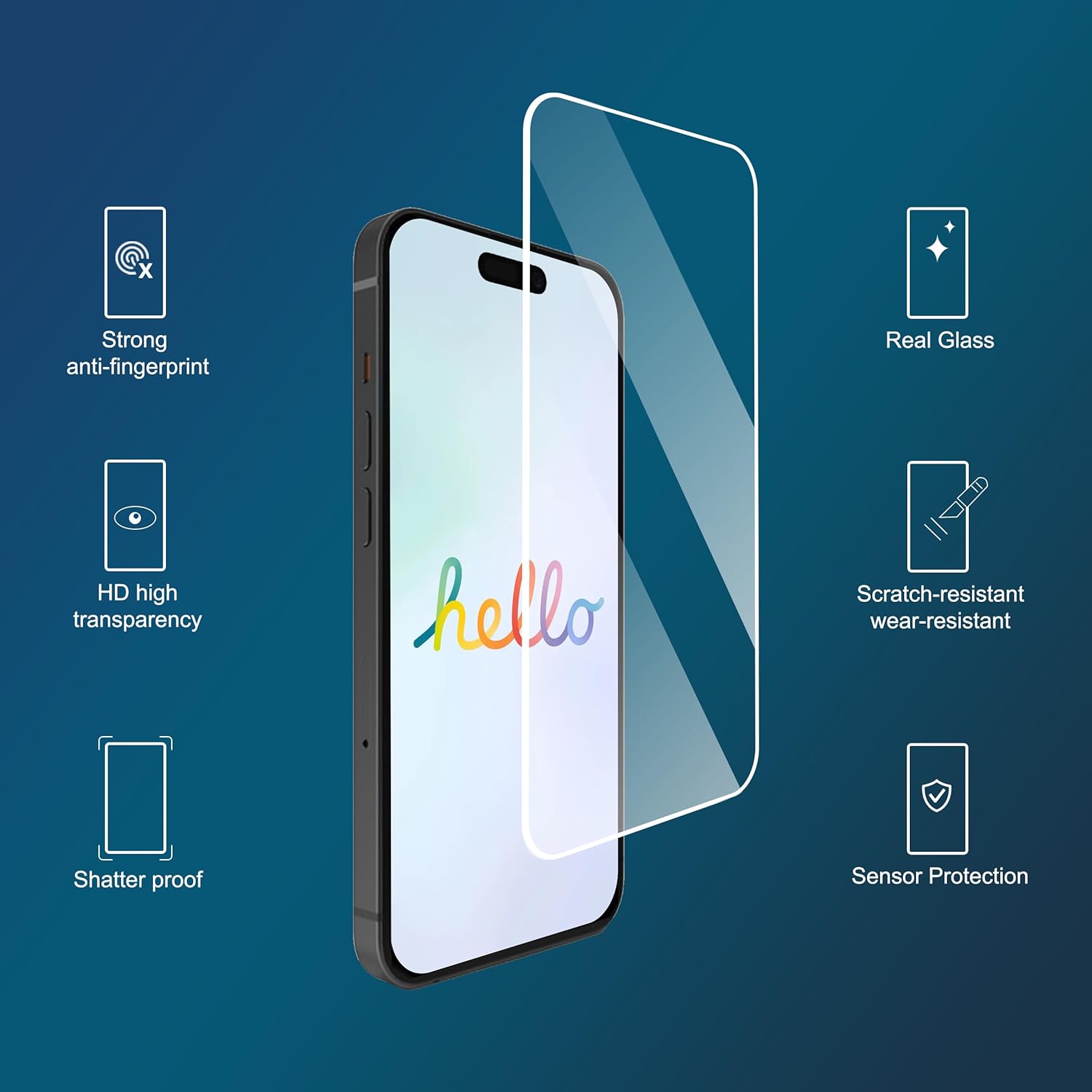
You just spent $1,200 on a Galaxy S24 Ultra or iPhone 15 Pro Max. The moment it slides out of the box, you’re already halfway to the phone case aisle trying to figure out which $10–$50 piece of glass or plastic is going to save your investment from a parking lot faceplant. Every option in the bin promises “9H hardness” — but if every product makes the same claim, how is that a differentiator? Short answer: it mostly isn’t. The 9H rating comes from a pencil hardness test (literally a scale measuring how hard a pencil’s graphite has to be before it scratches a surface), not a drop test, not real-world impact simulation. It tells you almost nothing about how a screen protector handles a phone landing face-down on concrete. This article breaks down what the ratings actually mean, which materials matter, where reviewers and owners consistently find value, and how to match your protector decision to your actual risk profile — with the math laid out plainly so you can move quickly.
Why “9H” Is Marketing, Not a Performance Guarantee
The Mohs scale — the standard geologists use to rank mineral hardness — goes from 1 (talc) to 10 (diamond). The pencil hardness scale used for screen protectors runs from 6B (very soft) to 9H (very hard) and is a completely different measurement derived from Japanese Industrial Standard JIS K 5600. The Verge’s explainer on screen scratch behavior notes that nearly all tempered glass protectors on the market rate at 9H on this pencil scale, which means the rating creates no meaningful separation between a $6 no-name import and a $50 Zagg InvisibleShield Ultra. Both claim 9H. One survives daily carry; the other shatters on the first significant drop.
What the pencil hardness test does measure is resistance to fine surface scratches — the kind caused by keys or sand particles. That’s real and useful. But it says nothing about:
- Impact resistance (how well the glass absorbs and distributes a drop’s kinetic energy)
- Adhesion quality (whether the protector stays bonded to the display under stress)
- Oleophobic coating durability (the anti-fingerprint layer’s longevity)
- Compatibility with in-display fingerprint sensors (particularly critical on OLED devices using ultrasonic readers like the S24 Ultra’s Qualcomm Ultrasonic sensor)
PCMag’s 2025 screen protector roundup reinforces this point directly, noting that glass thickness, edge tempering quality, and the number of strengthening layers in the manufacturing process are far better predictors of real-world durability than hardness rating alone.
The single number you actually want to know: glass thickness. Most budget glass protectors sit at 0.2–0.3mm. Premium options — Zagg’s Ultra line, ESR’s ArmorGlass, Spigen’s GLAS.tR — are typically spec’d at 0.3–0.4mm with multi-layer tempering. Thicker isn’t automatically better (touch sensitivity degrades past a threshold), but for drop protection, reviewers consistently find the sweet spot around 0.33mm.
Material Showdown: Tempered Glass vs. TPU Film vs. Hybrid
If you’re six months into recommending accessories to customers or sourcing them for a retail floor set, you already know the three material camps. Here’s the honest tradeoff table:
| Material | Scratch Resistance | Drop Absorption | Touch Feel | Sensor Compatibility | Price Range |
|---|---|---|---|---|---|
| Tempered Glass | High | Medium | Glass-like (best) | Variable | $10–$55 |
| TPU Film (thermoplastic polyurethane — a flexible, self-healing plastic) | Medium | High | Slightly rubbery | Excellent | $8–$30 |
| Hybrid (glass + TPU backing) | High | High | Near-glass | Good | $25–$60 |
Tempered glass remains the overwhelming preference in aggregate review scores. Wirecutter’s roundup for iPhone screen protectors consistently ranks glass options as top picks precisely because the touch experience is closest to the bare display — important on a device where you’re paying for a premium panel. The tradeoff is brittleness: glass protectors are sacrificial by design. They absorb impact by shattering (ideally before your actual display does), which means replacement costs factor into total ownership math.
TPU film has had a resurgence thanks to self-healing formulations. Brands like Spigen, ESR, and Whitestone now market TPU films with surface layers that can “heal” light surface abrasions at room temperature over 24–48 hours. Tom’s Guide’s Galaxy S24 Ultra protector coverage notes that TPU options are the only material category that genuinely plays well with every generation of in-display fingerprint sensor, including both optical and ultrasonic variants, because film flex prevents the micro-air-gap issues that plague rigid glass on curved displays.
Hybrid options — typically a thin tempered glass face laminated to a TPU or polymer shock-absorbing backing — represent the fastest-growing category at retail heading into 2026. The tradeoff is price and installation complexity. Whitestone Dome and Zagg’s InvisibleShield Glass Elite VisionGuard+ sit in this tier. CNET’s 2025 coverage of these hybrid formats points out that the adhesive application process (many use UV or liquid adhesive installation) raises the barrier for self-install; Zagg’s in-store installation service partially addresses this for buyers near a retail partner.
The Sensor Compatibility Problem (And Why It Matters More on Flagships)
Here’s the friction point that generates the most return-desk headaches: in-display fingerprint sensors. If you’re stocking or recommending screen protectors for the Galaxy S24 Ultra, S25 Ultra, or any OnePlus flagship using Qualcomm’s ultrasonic fingerprint reader, not all glass protectors are compatible — and the failure mode isn’t always obvious at install. The sensor might work at 70% reliability instead of failing outright, which gets blamed on the phone rather than the protector.
By the numbers:
- Samsung Galaxy S24 Ultra uses a Qualcomm 3D Sonic Max ultrasonic sensor embedded under the display
- Ultrasonic sensors read fingerprints by bouncing sound waves through the glass stack — adding even 0.1mm of uncertified glass changes the acoustic profile
- Manufacturers who certify compatibility include Spigen (GLAS.tR Slim S), ESR (TemperedGlass+), and Zagg (InvisibleShield Glass Elite) — all explicitly list “ultrasonic fingerprint compatible” in spec documentation
- Optical sensors (used in most mid-range devices) are more forgiving; TPU film is nearly universally compatible regardless of brand
The Verge’s coverage of display sensor interference has noted this is one of the top user complaints in the post-install phase, and it’s almost always material-and-thickness related rather than a device defect. If your customer is buying a protector for an ultrasonic-sensor flagship, compatibility certification isn’t optional — it’s the first filter.
For Apple’s Face ID devices (iPhone 15 series and newer), this is a non-issue at the protector level since the biometric reader is in the Dynamic Island / front camera assembly, not under the display. But ProMotion display smoothness (Apple’s term for the adaptive 1–120Hz refresh technology) can feel degraded with thick or poorly adhered glass, per aggregate owner reports across MacRumors forum threads and review comment sections.
How to Match Protector to Risk Profile
This is where the decision framework pays off. Rather than defaulting to “most expensive = safest,” the right call depends on how and where the phone gets used. Here’s the honest if/then logic:
If you (or your customer) carry the phone loose in a pocket with keys or coins: Prioritize scratch resistance above all else. Tempered glass at 0.33mm+ wins here. Any 9H-rated premium option (Spigen GLAS.tR, ESR ArmorGlass, Zagg Glass Elite) will handle this use case. Budget options rated 9H will technically work, but oleophobic coating quality degrades faster on no-name glass, per long-run reviewer notes at PCMag and Tom’s Guide.
If the device is a workhorse that gets set face-down on surfaces regularly: Hybrid TPU-backed glass or thick TPU film. The added flex absorbs the micro-impacts that chip glass edges over time. ESR’s HaloLock cases with Magsafe + the ArmorGlass protector is a popular combination reviewers note for this use case.
If the device is a $1,200 flagship with an ultrasonic fingerprint sensor: Buy only from the compatibility-certified list above. Spend the extra $15 for a brand that publishes sensor testing documentation. The $9.99 three-pack from an unverified storefront will work about 60% of the time and drive replacement costs up.
If you’re recommending protectors at the mid-market ($300–$600 phone) tier: The cost-per-use math changes. A $25 Spigen or ESR glass protector on a Pixel 8 or Galaxy A54 represents a larger percentage of device value than the same protector on a Pro Max. CNET’s budget protector coverage suggests that for mid-range devices, a well-reviewed $12–$15 tempered glass option from an established third party (not anonymous white-label imports) hits the right balance. Brands like JETech consistently appear in aggregated review sets as delivering solid tempered glass quality at this tier without the premium branding markup.
If the device is prepaid / MVNO and the buyer is cost-sensitive: A $8–$12 TPU film with decent adhesion is the pragmatic call. Owners report these don’t match the feel of glass, but they’re far more likely to survive being reinstalled after a phone trade-in — relevant when devices cycle every 12–18 months on plans like Mint Mobile or Cricket where upgrade economics are different.
The Replacement Math No One Mentions
A screen protector isn’t a one-time purchase — it’s a recurring cost category. The median life of a tempered glass protector in “normal use” across aggregated review notes sits around 8–14 months before chipping, crazing (a network of micro-cracks that don’t break the glass but affect clarity), or sensor interference becomes worth addressing.
At $25–$35 per replacement, a flagship owner going through two protectors during a 24-month carrier contract cycle is spending $50–$70 on glass alone. That’s meaningful relative to the $0 cost of a bare screen — but it’s also a fraction of a single display repair on an iPhone 15 Pro Max, which Apple’s published out-of-warranty screen repair pricing puts at $379 for the Pro Max. Even one prevention event justifies years of protector replacement cycles.
The decision rule is straightforward: match material to use pattern, filter ruthlessly on sensor compatibility for ultrasonic fingerprint devices, and treat brand-certified options as baseline for any device above $700. The 9H hardness label on the box tells you almost nothing useful on its own — but the thickness spec, compatibility certification, and manufacturer’s warranty terms tell you almost everything you need.